Storm preparedness
7 Cyclone Power Cut Checks: Andhra Pradesh & Odisha
Check utility notices, backup loads and restoration updates before the forecast storm.
Published by PowerCutStatus.in · Published
Cyclone power cut preparedness matters in Andhra Pradesh and Odisha as residents follow the forecast for 28 October. What do you actually know about your home? A weather warning can tell you to prepare. It cannot tell you whether your street will lose power. Nor can it tell you when supply will return. That matters when families share screenshots and charge every phone in the house.
Andhra Pradesh and Odisha residents have a reason to check their plans now. IMD’s latest retrieved bulletin forecasts a heavy storm approaching the Andhra Pradesh coast on 28 October. However, that forecast is not a power shutdown notice. This guide explains how to find your supplier, check local evidence, plan key backup loads and handle an uncertain restoration time.
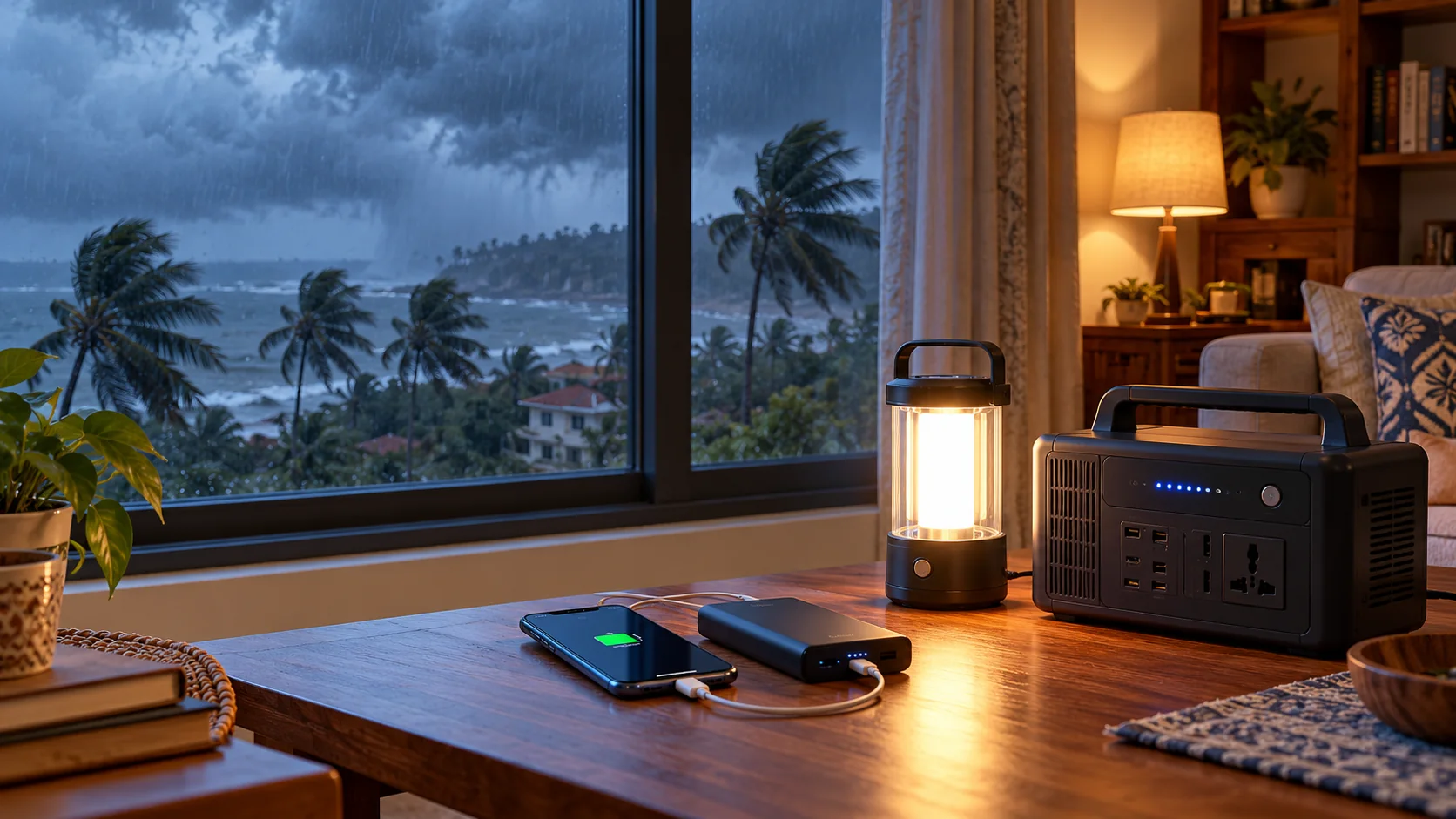
What IMD’s 25 October forecast says
The IMD weather bulletin, issued at 16:39 IST on 25 October, forecasts further intensification over the Bay of Bengal. It projects a coast crossing between Bapatla and Visakhapatnam on 28 October.
The bulletin also warns of extremely heavy rain in parts of coastal Andhra Pradesh during 27–28 October. Odisha has heavy rainfall warnings, including isolated extremely heavy rain on 28 October. These forecasts apply to the stated places and dates.
Check the latest bulletin before making decisions. The linked PDF changes as IMD publishes updates, so its contents may differ from this dated summary.
For cyclone power cut preparedness, the message is clear: plan early. It is not evidence that every home in those regions will lose supply.
1. Check Andhra Pradesh and Odisha power cut notices
Start with your latest power bill. Look for the supplier’s name and your service number. Your state name alone may not tell you which firm serves your home.
Andhra Pradesh has multiple power companies. Likewise, Odisha has power firms serving different areas. A number copied from another district’s social post may send you to the wrong team.
For example, APEPDCL’s official contact page lists 1912 for power-related complaints. Its online complaint form asks for an eight-digit or 16-digit consumer service number. Use that number only through the supplier’s official private channel.
TPSODL’s current contact page lists 1912 and 1800 2026 for complaints. Its website also provides an outage-information link. These details apply to TPSODL customers. Other parts of Odisha have their own suppliers.
Check these routes through APEPDCL’s official contact page or TPSODL’s official contact page, based on the name on your bill. Also, save these details on your phone.
Also, a photo of your bill can help when mobile data fails. However, don’t post that photo publicly. It may show your address and account details.
2. Verify a cyclone power cut notice
A rumour about power cuts often travels further than the source notice. One feeder’s outage can become “the entire city has no power” after several forwards.
Before relying on a message, follow this sequence:
- Find the original notice from your supplier.
- Check its issue date and the outage date.
- Match the city, area and feeder details.
- Read whether it describes a planned shutdown, a fault or general preparedness.
- Check for a later cancellation, extension or restoration update.
If you don’t know your feeder, ask the supplier. Give your service number through its private channel. Don’t assume that a nearby landmark proves a match.
Use this table to see what each source can tell you.
| Details you find | What it shows | What remains unknown |
|---|---|---|
| IMD rain or wind warning | Forecast weather risk | Whether your home will lose supply |
| Supplier shutdown notice naming your area | A published outage plan | Whether the plan will change |
| Supplier fault update | A known grid fault | Every building affected, unless specified |
| Neighbour’s power-off report | That person’s report | Your feeder’s full state |
| Blank outage search result | No matching entry was returned | Whether power is available |
| Supplier restoration estimate | A current repair estimate | A firm power return time |
For a possible power cut, no matching notice does not mean “power confirmed on.” It means you still need local evidence.
3. Cyclone power cut preparedness: home kit
You don’t need to power your whole home to make an outage easier to handle. First, decide what your household needs most.
Before conditions worsen, prepare:
- Charged phones and matching power banks.
- LED torches or rechargeable emergency lights.
- Charging cables in one easy-to-find place.
- Your power service number and complaint reference.
- An offline copy of provider contact details.
- A written list of devices connected to backup.
- A separate support plan for anyone relying on powered care devices.
Next, keep this kit somewhere dry and easy to reach. Then tell everyone at home where it is.
A possible power cut can also interrupt broadband gear outside your home. Therefore, a working router does not guarantee internet access.
Download key details while the connection works. Save key contacts as text, rather than using only web pages.
If someone depends on medical equipment, arrange backup with their care team and equipment supplier beforehand. A home backup estimate cannot show how long care devices will run safely.
4. Estimate inverter backup time for key loads
An inverter’s VA rating and a battery’s Ah rating do not mean the same thing. The inverter must handle the load you plug in. At the same time, the battery provides stored energy.
Think of them as the tap and the tank. A large tap does not create a larger water supply.
Start with the watts each device needs. Don’t judge the load by how many sockets you can fill. For example, two 9-watt lamps, one 35-watt fan and a 12-watt router total 65 watts.
Those figures are an illustration, not standard ratings for every product. Instead, read your own device labels. Use measured power use if you have it.
Now suppose a battery system offers 600 watt-hours of usable energy at the device side, after losses and reserve. At a steady 65 watts, the math gives roughly 9.2 hours.
If the load rises to 150 watts, the same assumed energy gives four hours. That difference shows why reducing the load matters.
However, actual runtime depends on battery health, heat, charge level and losses. It also changes as you add more loads. Use this math to plan your backup. It cannot tell you when mains power will return.
For cyclone power cut preparedness, start with lights, a phone and a fan if you need one. Check whether the inverter can handle startup demand before adding motors or other devices.
Use our inverter backup time and battery sizing guide to understand those limits. Leave changes to your system and wiring work to a trained professional.
5. Know what to do if power fails
If power fails, check your surroundings without approaching electrical equipment. From a safe place, can you see if nearby homes or streetlights also lost power?
What you see can help describe the problem. However, it cannot prove the cause or find every affected connection.
Report the outage to your provider. Give your service number in private, your area, the time it started and any safely seen hazard.
Also, keep the complaint reference. It helps you follow the existing report when asking for progress.
If nearby homes have supply, use our house-only power loss checklist. Don’t open a meter box, remove covers or investigate wet wiring.
Stay away from fallen wires, damaged poles and waterlogged power installations. TPSODL’s monsoon advice warns people to stay clear of flooded electrical equipment.
Treat a fallen wire as dangerous even when nearby lights are off. Only the local supplier can show whether gear is safe.
6. Find power restoration updates without guessing
“When will it come back?” is the question everyone wants answered. Sometimes, the honest answer is that the supplier has not announced a time.
Crews may need to locate damage, assess access and make sure crews can work safely. For example, a fault affecting one street can differ greatly from damage further upstream.
During a possible power cut, restoration may also happen in stages. Supply returning in one neighbourhood does not show that your building is ready.
Therefore, look for three separate details: when the update appeared, which place it covers and whether the time is an estimate. An old estimate should not become a fresh countdown simply because a page reloads.
If no official time exists, the page should say so plainly. A firm but wrong guess can leave homes without enough backup.
Next, ask the provider whether your complaint remains open and whether it has issued a revised estimate. At the same time, plan around your remaining backup power rather than a promised hour from an unchecked post.
7. Cyclone power cut preparedness: gear safety
A power cut is a poor time to improvise a power setup. Instead, use gear according to its instructions and keep it away from water.
Never run a fuel-powered generator indoors or in an enclosed space. Ready.gov’s outage guidance says generators should operate outdoors, at least 20 feet from building openings.
Don’t connect a generator to a wall socket to feed the house. Have a trained electrician arrange any approved connection and transfer gear.
After flooding, don’t switch wet devices or affected circuits back on yourself. Ask the supplier or a trained electrician to check it first.
Also, keep clear when crews arrive. A street that looks quiet can still contain damaged gear and dangerous wires.
Cyclone power cut preparedness FAQs
Will power be disconnected before the storm?
A weather forecast alone does not show that crews plan to cut supply. Check your supplier’s latest notice for your exact area. Follow any published safety instructions, but don’t assume a statewide shutdown without evidence.
Where can I check restoration updates?
Use the provider named on your bill. Check its official website, outage details and complaint-status service, where available. Also, keep your complaint reference and read each update’s location and timestamp.
How long can my inverter support key devices?
Divide usable energy at the device side, in watt-hours, by the total running load in watts. For example, 600 usable watt-hours divided by 100 watts gives six hours. However, real runtime varies, so keep a reserve.
Has APEPDCL announced a shutdown for my area?
This guide has not verified an area-specific shutdown notice for your home. Check APEPDCL’s official notices and match your service area and date. An empty search result does not confirm that power is on.
Where can TPSODL customers check restoration updates?
Use TPSODL’s official website and its outage-information link. Alternatively, contact the supplier using the numbers listed above and your complaint reference. If no repair estimate exists, treat the restoration time as unknown.
Make the next check now
Cyclone power cut preparedness works best before you need it. Find your provider, save its contact details and choose your key backup loads today.
Then check the newest weather bulletin and any area-specific supplier notice. If supply fails, report it through the correct channel and keep the reference.
Use our state and city outage directory as a starting point for local coverage. Check the latest notice for your area now, and share this checklist with someone who may need it.
Sources and editorial scope
- IMD — 25 October 2026, 16:39 IST weather bulletin (rolling URL)
- APEPDCL — official contacts and complaints
- TPSODL — current customer contact details
- TPSODL — general monsoon safety guidance (2022; not current-event deployment evidence)
- Ready.gov — power outage and generator safety
The checklists are general preparation guidance. Provider procedures, product specifications and site conditions need to be checked for your own situation. Send a correction to PowerCutStatus.in if a source or explanation needs updating.